Food and Drink in Paris – Classic Dishes, Street Food, and French Spirits
Daily eating in Paris moves to its own tempo. Mornings start quietly with coffee and something small, afternoons leave room for a sweet pause, and evenings open up with wine, shared plates, and food picked up late on the street. What defines the experience is not a single regional tradition, but an urban food culture that has shaped how French cuisine is understood far beyond France.
Cafés provide structure, bistros and brasseries anchor everyday meals, patisseries turn desserts into a craft of precision, and Street Food connects the moments in between. Meals rarely feel staged or formal. They feel practical, relaxed, and naturally embedded in daily routines. This guide follows that rhythm, from the first coffee of the morning to a glass of Cognac in the evening, and everything eaten in between.
Cafés, Breakfast, and Parisian Mornings
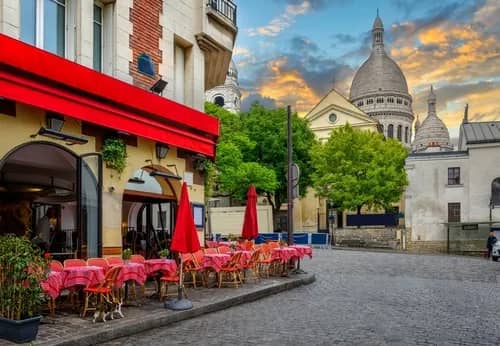
Breakfast in Paris is simple and light. The day usually starts with something sweet rather than a full plate, often taken quickly at a café, sometimes standing at the counter, sometimes seated outside. Savoury dishes play almost no role in the morning and belong later in the day. Routine matters more than choice. A familiar pastry, a short coffee, a brief pause before moving on.
Typical Parisian breakfast choices are
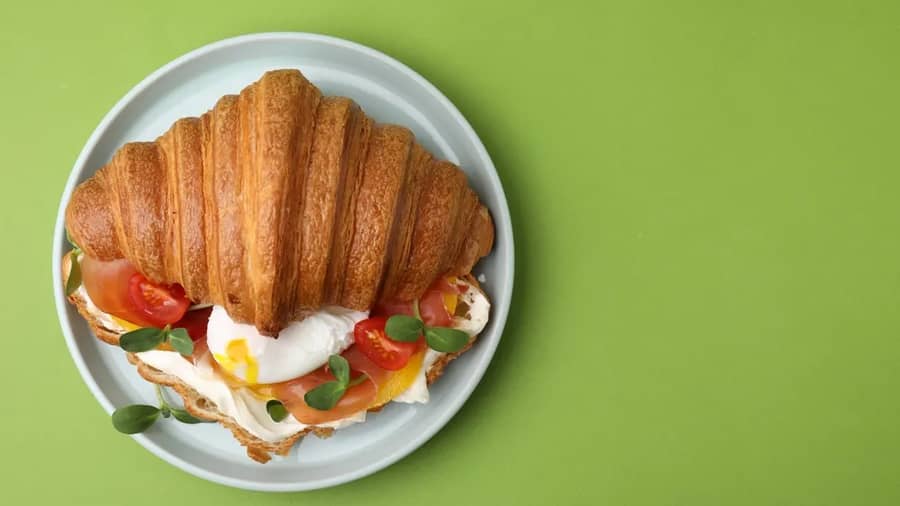
- Croissant – flaky butter pastry, crisp outside and soft inside
- Pain au chocolat – chocolate-filled pastry, slightly richer
- Baguette avec beurre et confiture – baguette with butter and jam, common for a slower start
- Yaourt ou fruits – yogurt or fruit, lighter and less common
Coffee is straightforward and secondary to the ritual. Espresso is the standard, café crème suits those who linger. Coffee to go is rare. Parisian mornings focus on clarity and rhythm, not abundance.
Patisseries and French Desserts
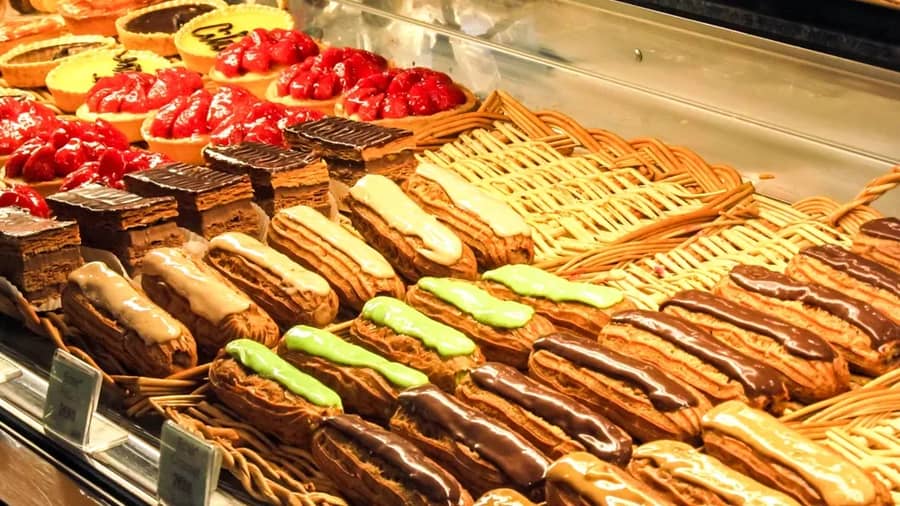
Desserts are an everyday part of life in Paris. Patisseries treat sweet things as craft, focused on balance, precision, and controlled sweetness rather than excess.
Parisian patisserie classics include
- Éclair – choux pastry filled with cream, often chocolate, coffee, or vanilla
- Mille-feuille – crisp puff pastry layers with pastry cream
- Macaron – light almond shells with flavoured filling
- Paris-Brest – choux pastry ring with praline cream
- Saint-Honoré – classic cake with choux pastry, cream, and caramel
- Tarte aux fruits – seasonal fruit tart
- Crème brûlée – vanilla custard with a caramelised sugar crust
Pastries are usually enjoyed as small treats rather than full dessert courses. Some stops are quick, others become short pauses with coffee or tea. Either way, patisseries add refined moments to the day.
The Classics of Parisian Bistro and Brasserie Cuisine
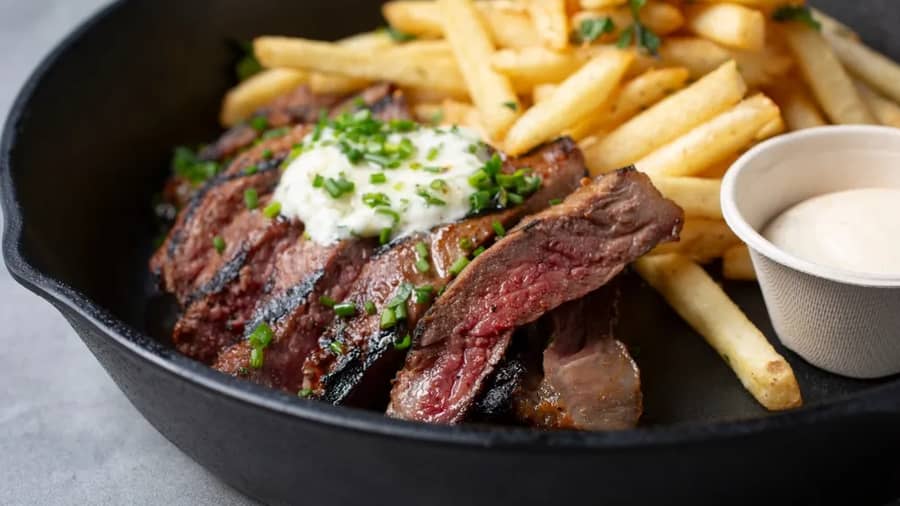
Everyday dining in Paris is shaped by bistros and brasseries. These places are not designed for experimentation, but for reliability. Menus tend to be compact, focused on dishes that have proven themselves over decades. The idea is simple: familiar food, prepared properly, served without fuss.
What makes these classics special is not complexity, but consistency. Techniques matter, ingredients matter, and repetition is part of the appeal. Many of these dishes appear across the city in similar form, which makes them easy to recognise and easy to order, especially for first-time visitors.
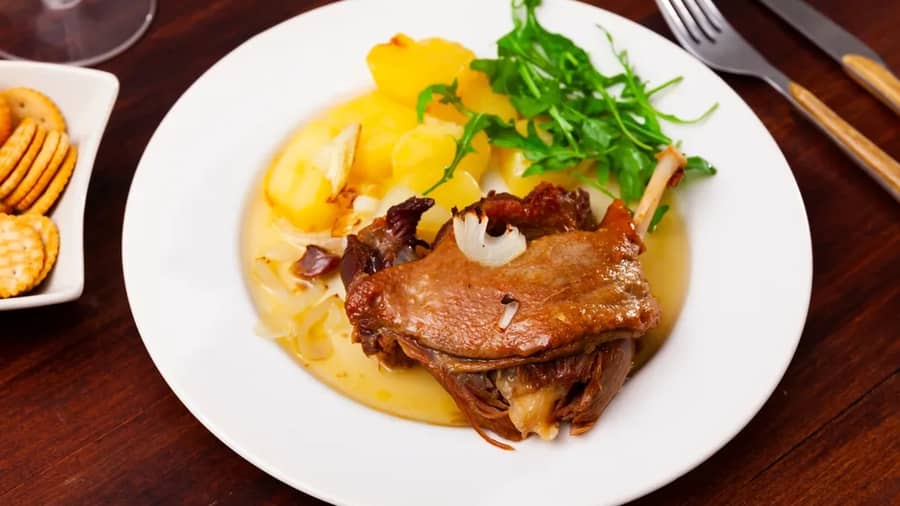
Classic Parisian bistro and brasserie dishes
- Steak frites – grilled steak with fries and a simple pan sauce
- Croque monsieur – warm ham and cheese sandwich with béchamel
- Croque madame – croque monsieur topped with an egg
- Soupe à l’oignon – slow-cooked onion soup with bread and melted cheese
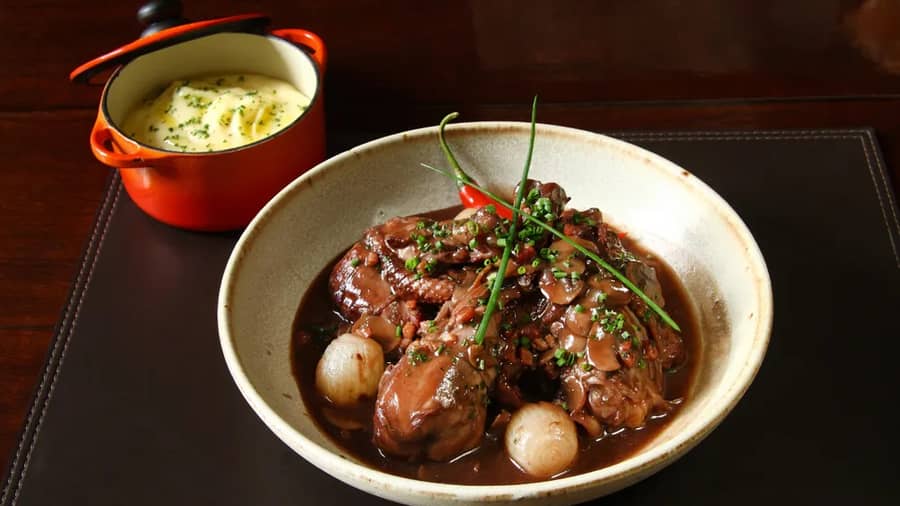
- Bœuf bourguignon – beef braised in red wine with vegetables
- Coq au vin – chicken cooked in wine with mushrooms
- Confit de canard – duck leg cooked in its own fat, crisp and tender
These dishes are rarely presented as showpieces. Portions are balanced, flavours are clear, and plates arrive without decoration. Bistro and brasserie food in Paris is about trust. You order knowing what to expect, and that predictability is precisely what makes these classics feel reassuring and timeless.
Markets, Bakeries, Cheese, and Everyday Food
Everyday eating in Paris depends heavily on small shops and local markets. Bakeries, cheese shops, and neighbourhood stalls supply the basics that shape daily meals, often with more impact than restaurants.
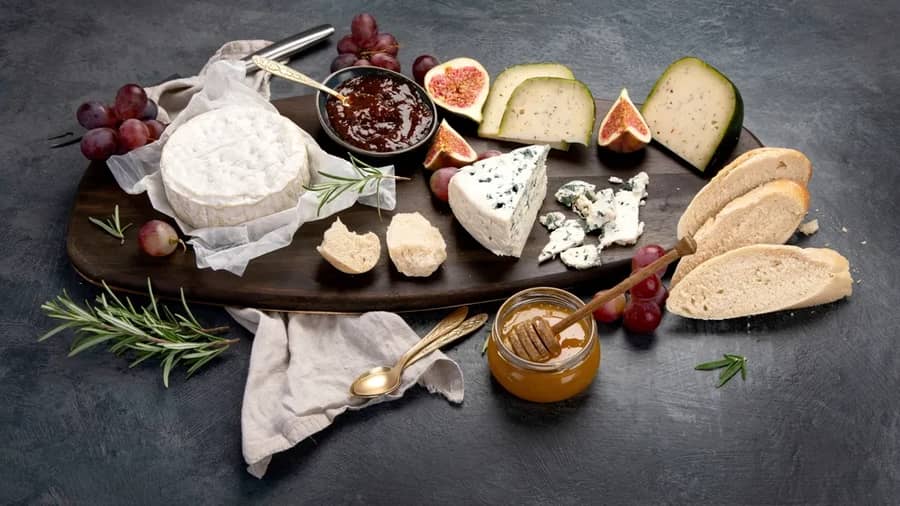
Bread is central to this routine. Baguettes are bought fresh and regularly, sometimes more than once a day, and serve as the foundation for simple meals. Cheese plays an equally important role and is treated as an everyday product rather than a luxury.
Everyday food staples in Paris
- Baguette – fresh white bread with a crisp crust and soft interior
- Fromage – a wide range of French cheeses, usually served simply with bread
- Beurre et confiture – butter and jam, common at breakfast and light meals
- Charcuterie – cold cuts such as ham, pâté, or terrines, easy to share
- Salades composées – simple mixed salads based on seasonal ingredients
Markets bring these elements together, combining fresh ingredients with ready-to-eat options. Many meals begin not with reservations, but with reliable products and familiar routines.
Street Food and Quick Eats
Street Food in Paris is integrated into daily life rather than organised as a separate scene. It fills gaps between meals, answers late-night hunger, and supports a city that eats at all hours.
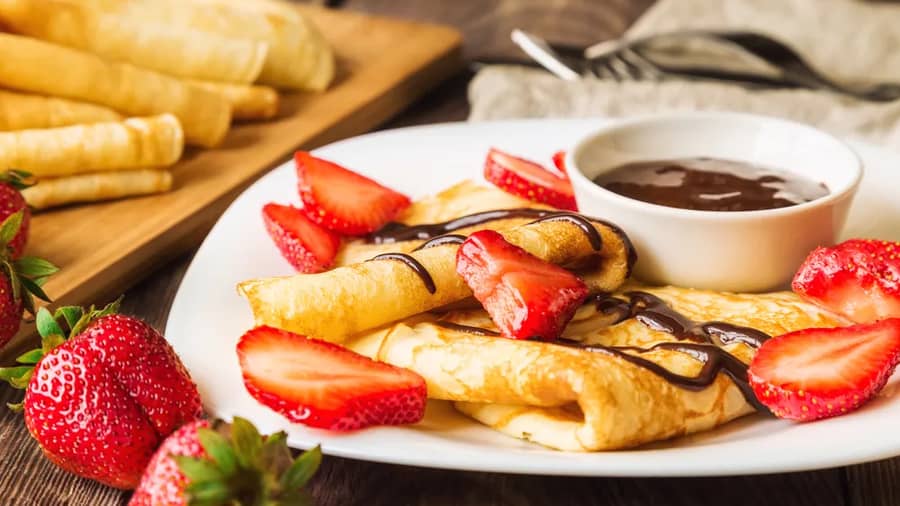
Typical Parisian Street Food options are
- Crêpes – prepared fresh, folded to go, sweet or savoury
- Sandwiches de boulangerie – baguette sandwiches with simple, quality fillings
- Falafel – chickpea fritters in flatbread, filling and widely available
- Shawarma and kebab – popular late in the evening, especially in lively districts
Street Food here is practical and dependable. It connects cafés, bars, and restaurants, allowing food to remain part of the day from morning until late at night.
Wine, Apéritif, and Parisian Drinking Culture
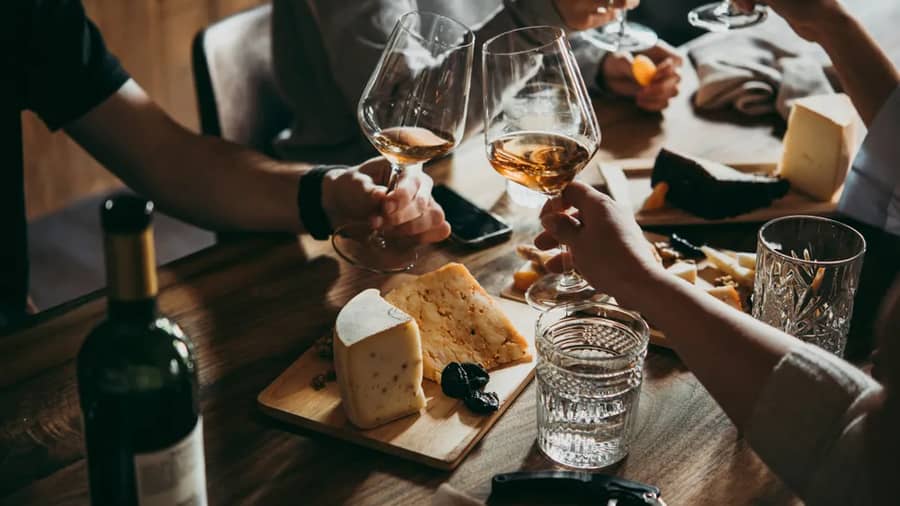
Wine is part of everyday life in Paris. It appears naturally with meals, before dinner as an apéritif, and later in the evening in wine bars. The focus lies less on labels and prestige, and more on timing, atmosphere, and balance. Paris produces little wine itself, but it is the meeting point of France’s great wine regions. The most familiar styles appear regularly on menus, often by the glass or as simple house wines.
- Bordeaux (red) – structured, dry red wines, often based on Cabernet Sauvignon or Merlot
- Bourgogne/Burgundy (red and white) – elegant Pinot Noir reds and mineral Chardonnay whites
- Loire Valley (white) – fresh, lighter whites, often Sauvignon Blanc or Chenin Blanc
- Rhône Valley (red) – fuller-bodied reds with spice and warmth
- Rosé – light and dry, especially popular in warmer months
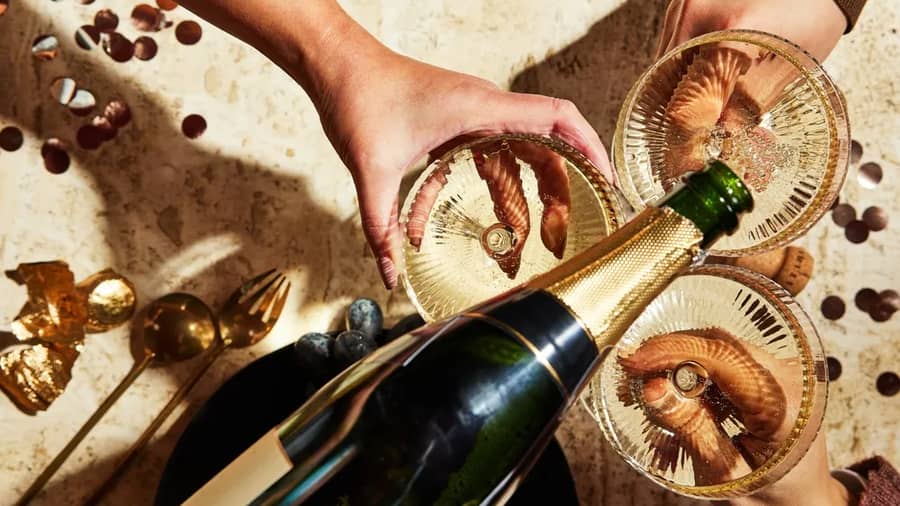
Sparkling wine plays an important role, especially around the apéritif.
- Champagne – iconic sparkling wine from the Champagne region, with famous houses such as Moët & Chandon, Veuve Clicquot, or Pommery
- Crémant – high-quality sparkling wine from other regions, commonly from Alsace or the Loire, with producers such as Lucien Albrecht or Bouvet Ladubay
The apéritif marks a clear pause in the day. Drinks are light, portions modest, and the goal is to slow down rather than to drink heavily.
- Kir – white wine with blackcurrant liqueur, traditionally made with Crème de Cassis de Dijon
- Pastis – anise-flavoured apéritif, most famously Ricard or Pernod, served diluted with water
- Herbal liqueurs – bittersweet, aromatic classics such as Chartreuse or Bénédictine, often enjoyed slowly
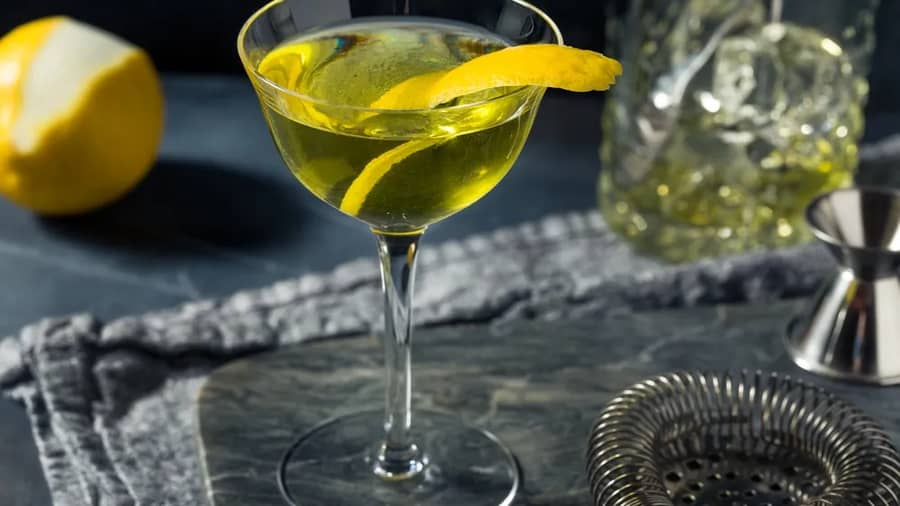
Wine bars tend to feel informal and compact. Cheese, charcuterie, or small seasonal plates often accompany drinks. Drinking in Paris is rarely about showing off. It is about company, ease, and letting the evening unfold naturally.
Beer, Spirits, and Late-Evening Drinks
Beer plays a minor role in Paris, but it is always available. It is chosen for refreshment rather than identity.
Beer commonly found in Paris
- Kronenbourg 1664 – the most recognisable French lager, light and widely available
- Heineken – although not a French brand, extremely common in Parisian bars and often the default option
As the evening moves on, spirits become more important. Late-evening drinks are less about cocktails and more about familiar digestifs enjoyed slowly.
Classic French late-evening spirits (digestifs) are
- Cognac – France’s best-known brandy, traditionally enjoyed after dinner, with houses such as Hennessy, Rémy Martin, or Martell
- Armagnac – an older and more rustic French brandy, often less polished but deeper in character, with producers like Château de Laubade or Delord
- Whisky and rum – although not French in origin, both are widely consumed in Paris, especially later in the evening, usually ordered simply and without ceremony
Late-night drinking typically happens in small, lively bars where conversation matters more than presentation. Digestifs mark the final phase of the evening, allowing nights to slow down, stretch out, or come to a quiet close.

Where Paris Eats and Drinks
Food culture in Paris is closely tied to neighbourhoods. Different areas favour different styles, times of day, and atmospheres. Knowing where to go makes it easier to find exactly what you are looking for.
Central areas and classic cafés
In the historic centre, cafés and traditional addresses dominate. This is where breakfast terraces, classic bistros, and long-established brasseries are easiest to find. It is ideal for morning coffee, lunch classics, and a first introduction to Parisian dining.
The Latin Quarter and nearby streets
Around the Latin Quarter, food is shaped by students, bookstores, and long-standing institutions. Expect casual bistros, affordable lunches, simple wine bars, and places that stay open late. This area works well for relaxed dinners and informal evenings.
Montmartre
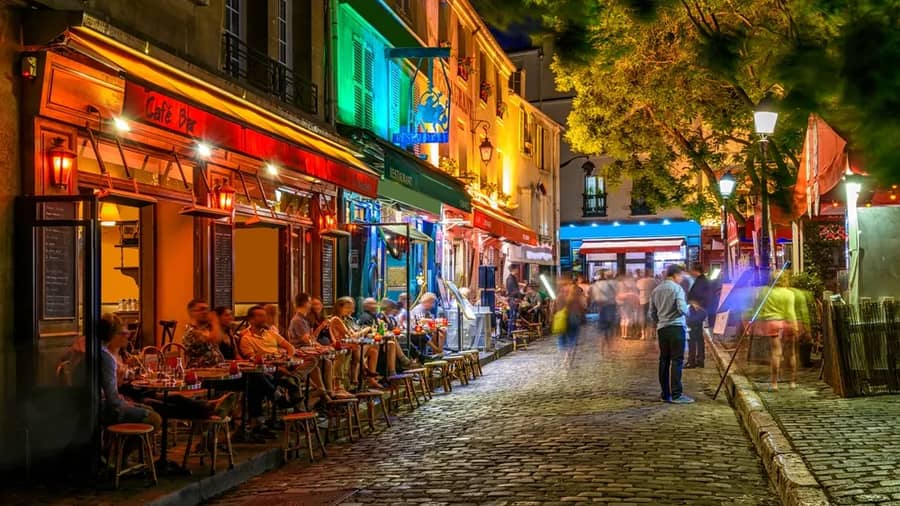
Montmartre combines tradition with a neighbourhood feel. Classic bistros sit next to small cafés and wine bars, often with a slower pace. It suits unhurried meals, afternoon pauses, and evenings that feel more local than central.
Le Marais
Le Marais is one of the most versatile food areas in Paris. Bakeries, patisseries, cafés, wine bars, and Street Food options appear side by side. Falafel and other international quick eats are especially prominent here, making it a strong choice for casual meals and late bites.
Markets and food halls
Paris offers places where eating and shopping merge. Food markets provide fresh produce alongside ready-to-eat options, while modern food halls bring different cuisines together under one roof. These locations are ideal for tasting small portions, sharing dishes, and informal eating without committing to a full restaurant.
Residential neighbourhoods
Outside the central areas, everyday food culture becomes even more visible. Local bakeries, cafés, and bistros focus on regulars, offering reliable meals and calmer atmospheres. These areas are well suited for simple lunches and quiet dinners.

À Table à Paris
Eating in Paris works best when it stays unforced. A light breakfast, a reliable lunch, something sweet in the afternoon, wine before dinner, and familiar food enjoyed along the way. The pleasure lies not in chasing highlights, but in letting food and drink blend naturally into the day. That rhythm shapes how Paris eats and drinks. It feels steady, confident, and closely tied to everyday life, not staged for visitors, but lived daily at cafés, tables, counters, and markets across the city.