Getting Around Rome – Public Transport and Tickets Made Simple
Rome’s public transport system covers the entire city and is essential for moving between more distant neighbourhoods and major sights. While many central areas can be explored on foot, buses, metro lines and trams are often necessary to save time and energy. To use public transport in Rome, a valid ticket is required.
Tickets & Prices
One-Ride Tickets
Single Ticket – Integrated Time Ticket (BIT)
- 1.50 €, 1.65 $*
- Valid for 100 minutes from first validation
- Unlimited transfers on buses, trams and urban rail
- Metro valid for one single journey
- Metro line changes A–B–B1 allowed without passing turnstiles
- Passing turnstiles permitted only when changing between metro lines A and C
- Trenitalia trains valid for one single journey only
Multi-Ride Integrated Time Tickets (Multi-BIT)
- Available in bundles of 2, 3, 5 or 10 rides.
- Same validity and conditions as a single BIT
- No price advantage per rideConvenience option for advance purchase and flexible use
*Prices as of January 2026
Time-Based Tickets
24-Hour Travel Pass
- 7.00 €, 7.70 $*
- Unlimited travel for 24 hours from first validation
- Valid on all public transport within Rome
- Worthwhile from the fifth ride onward and if multiple metro transfers are expected
48-Hour Travel Pass
- 12.50 €, 13.70 $*
- Unlimited travel for 48 hours from first validation
- Worthwhile with more than four rides per day and if multiple metro transfers are expected
72-Hour Travel Pass
- 18.00 €, 19.70 $*
- Unlimited travel for 72 hours from first validation
- Worthwhile with more than four rides per day and if multiple metro transfers are expected
*Prices as of January 2026
Weekly Travel Pass (CIS)
- 24.00 €, 26.30 $*
- Unlimited travel for 7 consecutive days from first validation
- Worthwhile from the fourth day of stay
Monthly Travel Pass
- 35.00 €, 38.40 $*
- Unlimited travel for one full calendar month
- Worthwhile from the tenth day of stay
Good to know: Children under the age of 10 travel free when accompanied by a paying adult.
Ticket Formats and How to Use Them
Paper Tickets
- Still widely used in Rome
- Available for all standard ticket types, including time-based passes
- Sold at ticket machines, kiosks and authorised sales points
- Must be validated at the start of each journey at metro turnstiles or on buses and trams

Digital Tickets via Smartphone Apps – The Most Convenient Option
- Choose between the official ATAC smartphone app partners TicketAppy or MooneyGo
- Single ride and time-based tickets can be purchased directly on the smartphone
- Tickets are stored digitally on the phone, no paper ticket required
- Ticket activation takes place directly in the app
- Apps include route planning, real-time service information and disruption alerts
Contactless Payment (Tap & Go)
- Contactless bank cards, phones or smartwatches can be used
- Tap at metro gates or on buses and trams
- Fare is charged automatically per ride
- Does not replace day or multi-day passes
Public Transport Overview
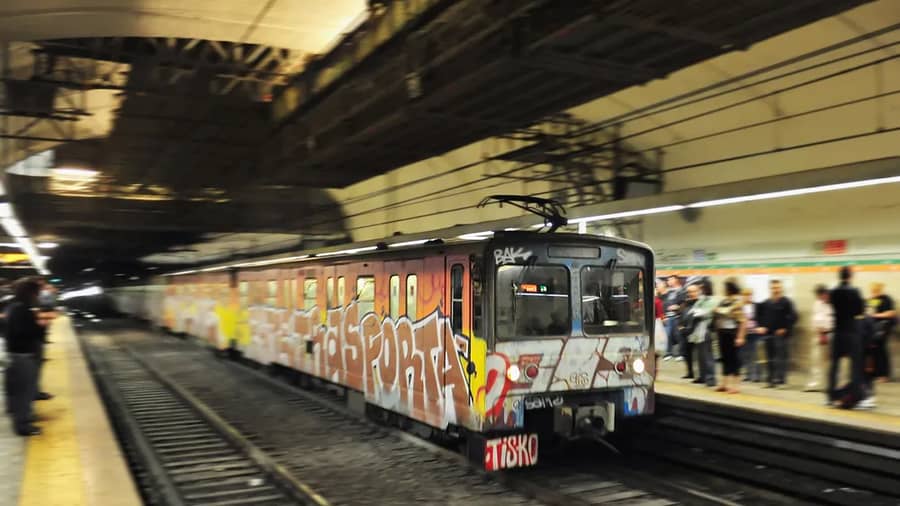
Metro
- Core rapid transit system for longer distances across the city
- Lines A, B, B1 and C serve major corridors and interchange points
- Operates from 5:30 a.m. until 11:30 p.m. Sunday to Thursday
- Extended service on Friday and Saturday nights until around 1:30 a.m.
- Trains run every 3–5 minutes during peak hours
- Off-peak frequency typically every 5–10 minutes
- Late evening intervals can extend to 10–15 minutes
Metro network
Metro Line Diagram
Journey Planner
Buses
- Backbone of Rome’s public transport network
- Extensive coverage, including areas without metro access
- Operate on most routes from 5:30 a.m. until midnight
- Frequency varies widely depending on the route
- Busy lines often run every 5–10 minutes
- Less frequented routes may run every 15–30 minutes
- Services are affected by road traffic, especially during rush hours
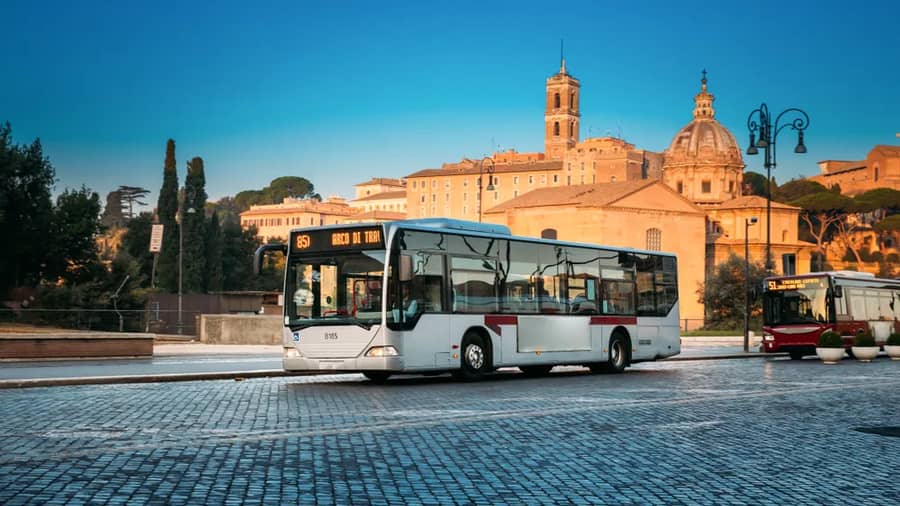
Night Buses
- Replace daytime services after midnight
- Operate on selected routes across the city
- Frequencies range from 15 to 60 minutes
- Provide basic overnight coverage rather than dense service
Trams and Urban Rail
- Play a secondary role for most visitors
- Mainly serve districts outside the historic centre

Airport Connections
- Rome is served by two main airports: Fiumicino and Ciampino
- Both airports are connected to the city by a combination of rail services, buses and private transfers
- These services require separate tickets, as standard single-ride and time-based city tickets are not valid
- For detailed information on routes, fares and the best way to reach the city centre, please refer to our guide Getting to the City from Rome Airports.
Getting Around Rome at a Glance
Rome’s public transport system works best when used selectively. The metro is the fastest option for longer distances, while buses fill the gaps across the city. Most tickets are simple to use, but airport connections follow separate rules and require extra planning. Once the basic ticket types and formats are clear, getting around Rome is straightforward and flexible, without the need for a car.
-1745499006.jpg)