Food and Drink in Prague – Between Classic Cuisine and Street Food
Traditional Czech cuisine is honest and down-to-earth. It thrives on meat, sauces, dumplings, and beer. Salty, savory appetizers and sweet desserts provide a fitting framework. Add to that the street food, which makes the city delicious on the go. It's precisely this mix that makes the Czech capital such a culinarily exciting place.
Cold and warm appetizers
Starters in Prague are often more than just an opening course. They accompany beer and are deeply rooted in pub culture. Everything is designed to stimulate the appetite and pair well with beer. Typical options include:
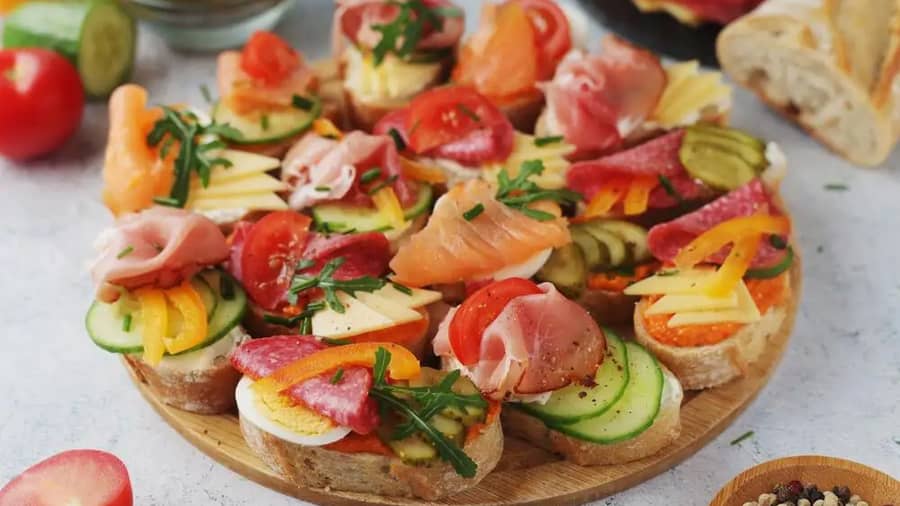
- Chlebíčky – Open-faced sandwiches arranged like small works of art, often topped with potato salad, egg or ham. Served cold, practical and widely loved.
- Pomazánky – Hearty spreads such as škvarková pomazánka made from pork cracklings or vaječná pomazánka with egg. Classic companions for the first beer.
- Nakládaný hermelín – Marinated soft cheese that develops its full flavor over time. One of the most famous beer snacks.
- Uzeniny – Simply served, well-seasoned sausages. Their simplicity is exactly what makes them so popular in pubs and beer halls.
- Polévky – Light soups meant as a warm start before heartier dishes follow. Straightforward and filling without being heavy.
The famous must-eat dishes
They form the foundation and are primarily shaped by Bohemian traditions, complemented by influences from Moravia and Silesia. They have been on menus for decades. Hearty, filling, and still popular. In Prague, they are part of everyday culinary life. These are the classics that locals love and you absolutely must try:
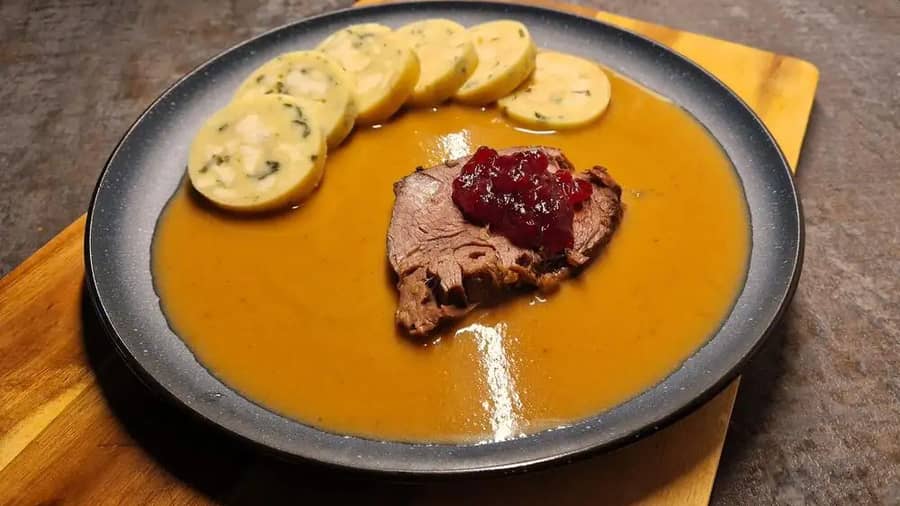
- Svíčková na smetaně – Gently braised beef in a creamy vegetable sauce, served with dumplings, cranberries and cream. For many, the national dish.
- Vepřo knedlo zelo – Roast pork with dumplings and sauerkraut. Hearty, classic and deeply Bohemian. A typical pub and Sunday dish.
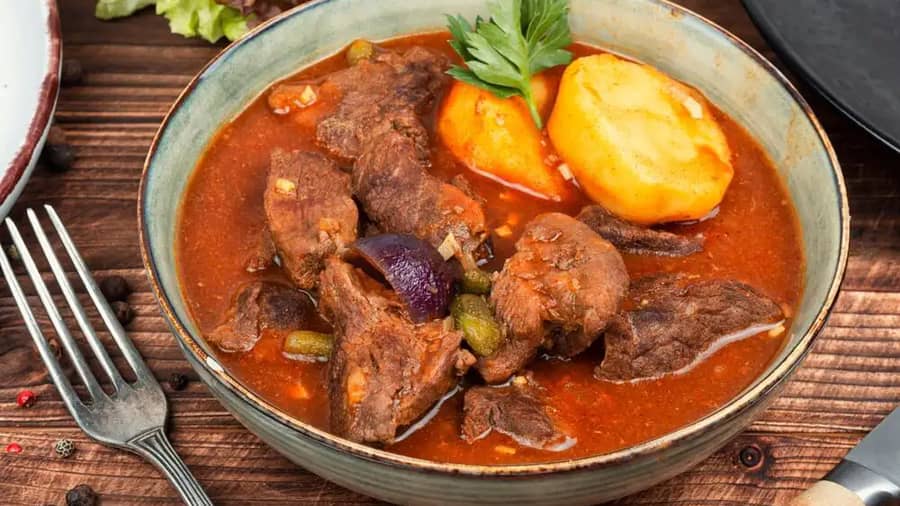
- Hovězí guláš – Czech-style beef goulash, thicker and milder than many expect. Almost always served with dumplings instead of bread. Ideal as a substantial lunch.
- Smažený sýr – Breaded cheese, usually Edam or Hermelín, fried until golden. Served with potatoes and tartar sauce. A true classic for a quick but filling meal.
- Knedlíky – The famous Bohemian dumplings belong with almost everything. They soak up sauces and make meals complete. Without dumplings, Czech cuisine would be missing its heart.
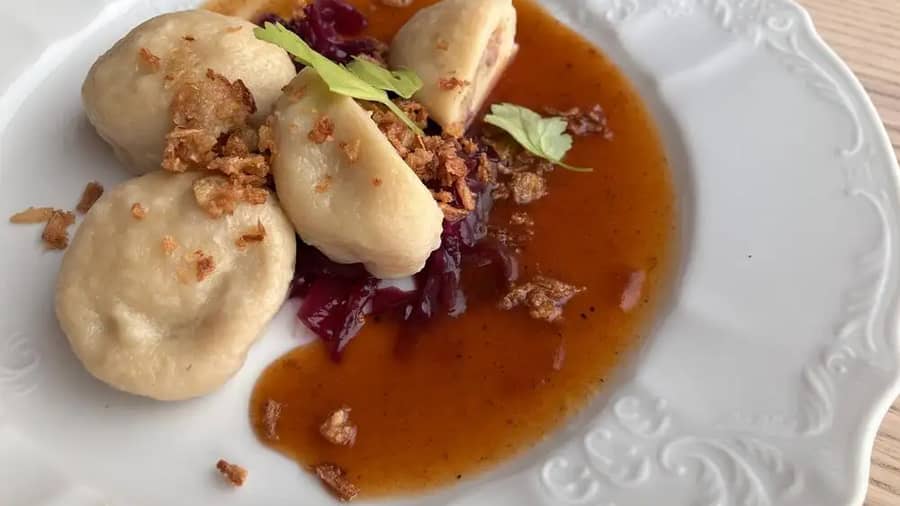
- Pečená kachna – Crispy roasted duck with cabbage and dumplings. Festive yet down-to-earth. Commonly found on traditional menus in Prague.
- Vepřové koleno – Pork knuckle, slow-cooked, crispy on the outside and juicy inside. Usually served with mustard, horseradish and bread. Rustic, hearty and very popular in beer halls.
- Jelení svíčková / Jelení guláš – Game dishes have a long tradition in Bohemia. Venison and deer are often braised and served with rich sauces, especially popular in colder months.
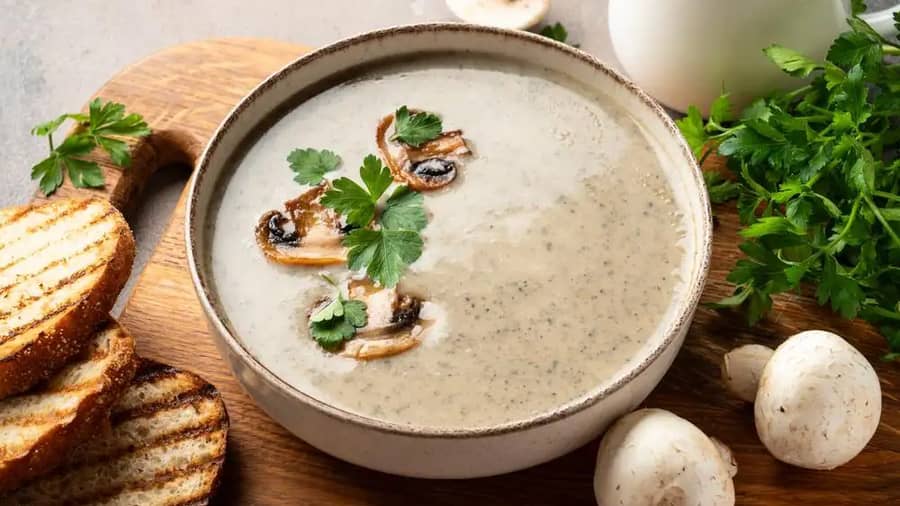
- Kulajda – Creamy soup with mushrooms, potatoes, dill and egg. Mild, slightly tangy and surprisingly filling. For many, more than just a starter.
- Česnečka – Garlic soup with marjoram and croutons. Simple, bold and warming. Often praised as the perfect remedy after a long night.
Desserts and sweet treats
- Koláče – Filled yeast pastries with quark, poppy seeds or plum jam. Simple, common and distinctly Czech.
- Bábovka – A classic marble cake that is a staple in many households.
- Větrník – Large cream-filled pastry with vanilla and whipped cream and a caramel glaze. Visually striking and very popular.

Street Food – Prague on the go
Street Food is now a fixed part of the city’s culinary landscape. It shows how Prague eats while moving: uncomplicated, hearty and often surprisingly traditional. Much of it comes from pub and tavern kitchens and works just as well outdoors. Typical examples are:
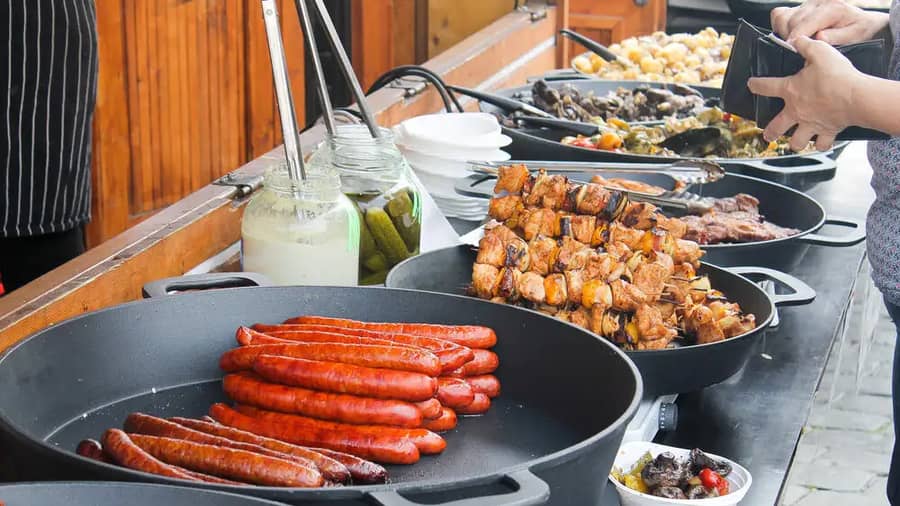
- Párek / Klobása – Grilled sausages. Coarse, juicy and simply served, usually with mustard and bread. One of the most classic snacks, quick to order and found everywhere.
- Langoš – Freshly fried flatbread, crispy and usually topped with garlic, cheese or sour cream. Filling, savory and especially popular at markets.
- Smažený sýr v housce – Breaded cheese to go. A pub classic served in a roll, perfect for a quick bite.
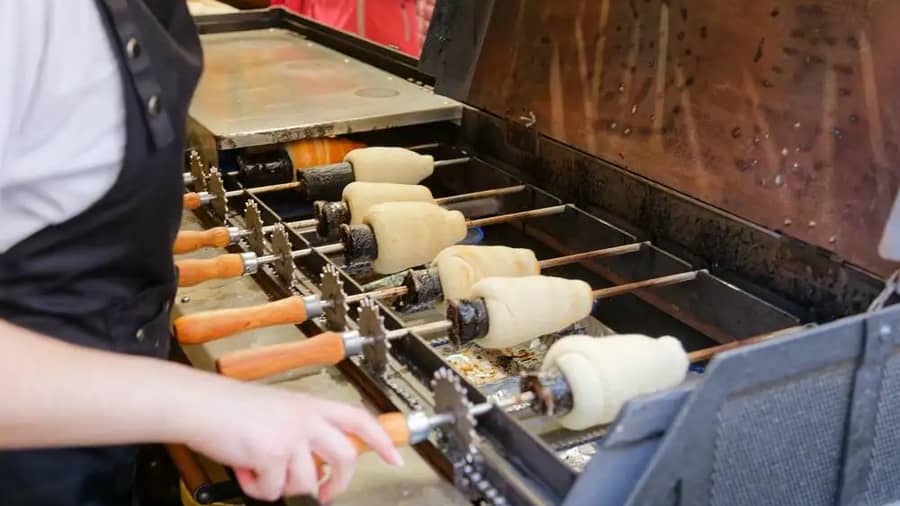
- Trdelník – Sweet pastry, crispy on the outside and soft inside, freshly prepared. Sweet treats play a major role in Prague’s Street Food scene, especially in the evening.
Drinks you must try
Beer – Czech cultural asset
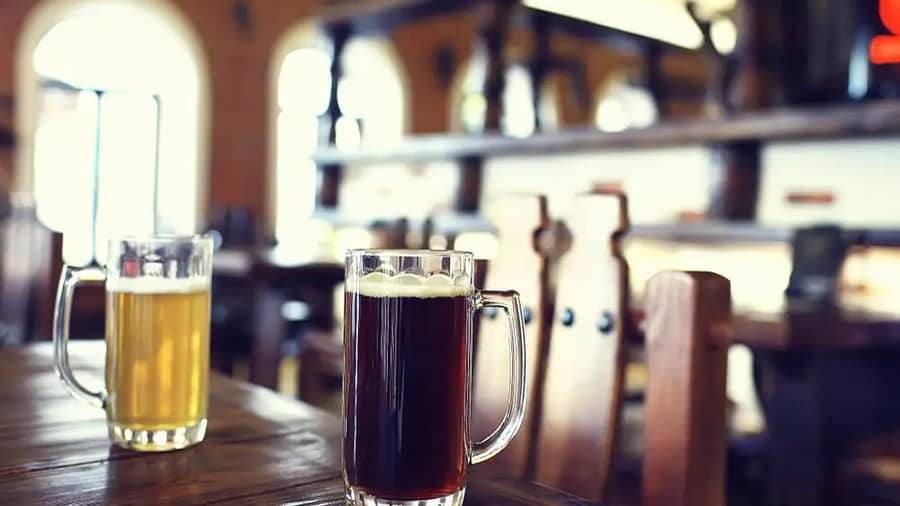
Nothing Works Without the Golden Brew. It is part of daily life and part of the cuisine. It is part of everyday life and cuisine, and in pubs, beer is as much a part of a meal as any other spice. These are the most well-known types of beer, catering to various palates:
- Pilsner Urquell – The world-famous beer from the city of Pilsen. Crisp, bitter and balanced, the benchmark for countless beers worldwide.
- Budweiser Budvar – Pale lager from České Budějovice. Fuller-bodied and more malty than a Pilsner, very well balanced.
- Staropramen – A typical Prague lager with a soft character. Everyday beer and a staple of local pub culture.
- Gambrinus – Widely available pale lager. A classic pub beer with an everyday feel.
- Krušovice – Historic brewery known for its malt-forward lagers.
- Velkopopovický Kozel – Best known for its dark lager. Mild, smooth and very popular.
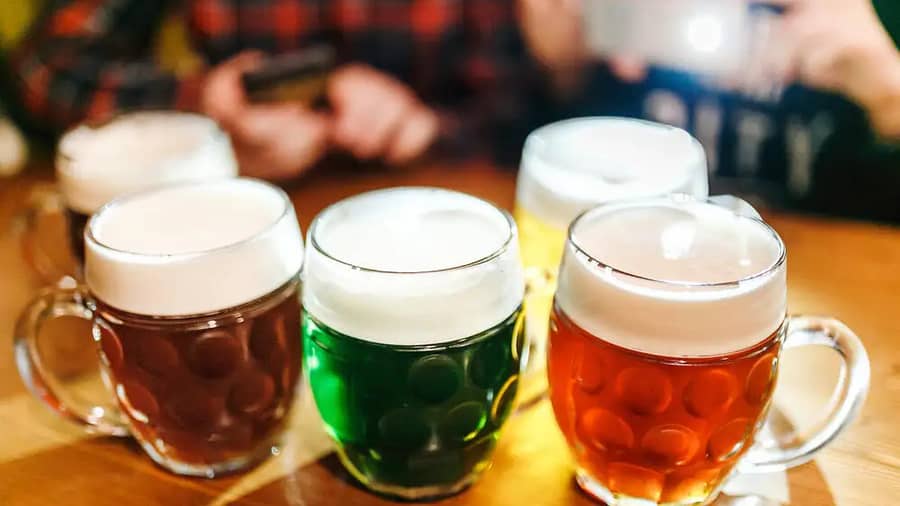
Alongside major brands, small breweries and craft beer producers now shape the scene. Many brew directly in Prague and serve their beer on-site. These offer modern interpretations of traditional styles, often bolder or more aromatic, without leaving Czech brewing traditions behind.
Spirits – An integral part of food culture
Liqueurs and spirits hold an important place in Czech culture. They belong to celebrations, family gatherings and everyday pub life. It is less about alcohol and more about ritual, they are sipped rather than rushed. The most popular spirits are:
- Becherovka – The country’s best-known herbal liqueur. Spicy, slightly bitter and traditionally served as a digestif.
- Slivovice – Plum brandy, especially common in Moravia. Strong, clear and deeply traditional.
- Hruškovice – Pear brandy with a fruity aroma. Slightly milder, but just as popular.
- Meruňkovice – Apricot brandy, intense and aromatic, especially appreciated in southern regions.
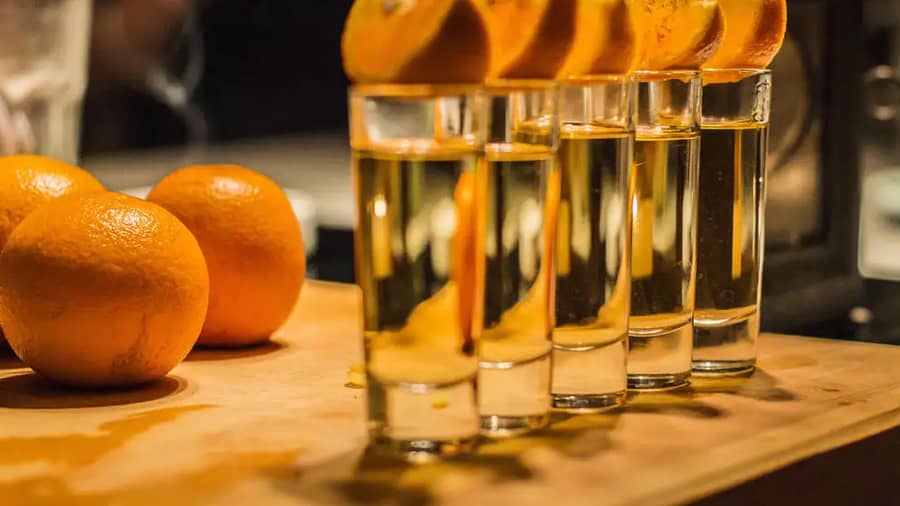
Absinthe – Prague’s green curiosity
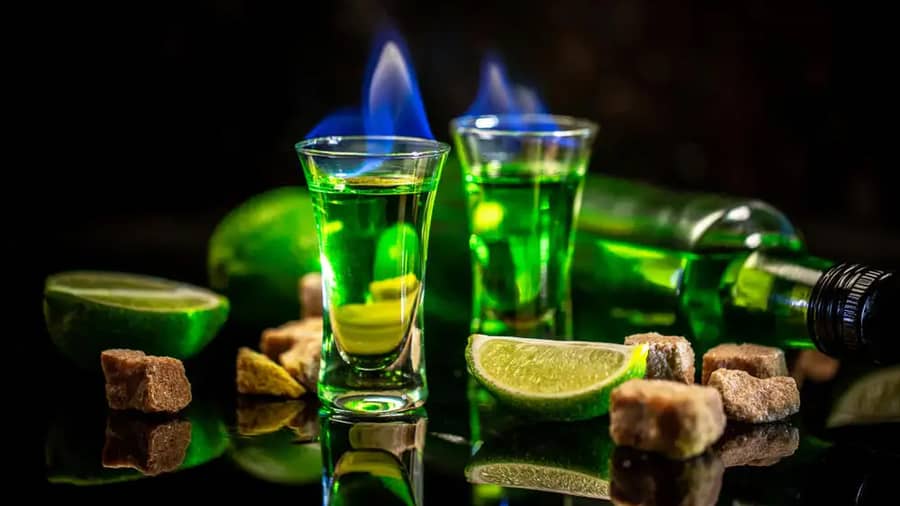
Absinthe gained fame in the 19th century as the drink of artists and bohemian circles. Its high alcohol content and wormwood created a reputation for intense, almost dangerous intoxication. Banned in many countries in the early 20th century, it was never entirely suppressed in Bohemia. After the fall of the Iron Curtain, absinthe returned to Prague as a symbol of freedom and nightlife. Today it is strictly regulated and enjoyed mainly for its ritual, history and cultural myth rather than sheer strength.
Wine – Underrated but Present
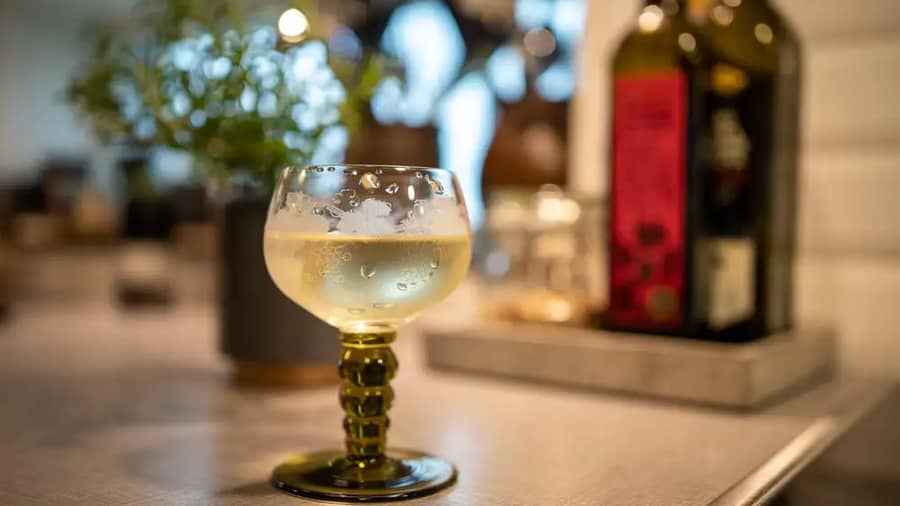
Wine plays a secondary role in the Czech Republic, but it is gaining confidence. The heart of Czech wine culture lies in South Moravia, where white wines dominate. Well-known Czech wines include:
- Veltlínské zelené – Fresh, dry and very popular. The country’s most recognizable white wine.
- Ryzlink rýnský – Elegant, aromatic and well-made, especially in South Moravia.
- Frankovka – The best-known Czech red wine. Bold, spicy and down-to-earth.
- Svatovavřinecké – Fruit-driven, soft and approachable, often poured locally.
Where Prague eats – Places of pleasure
Prague does not concentrate its culinary scene in a single area. Food and drink are spread across neighborhoods, but especially along certain streets, squares and riverbanks where life naturally gathers.
Traditional cuisine and classic venues
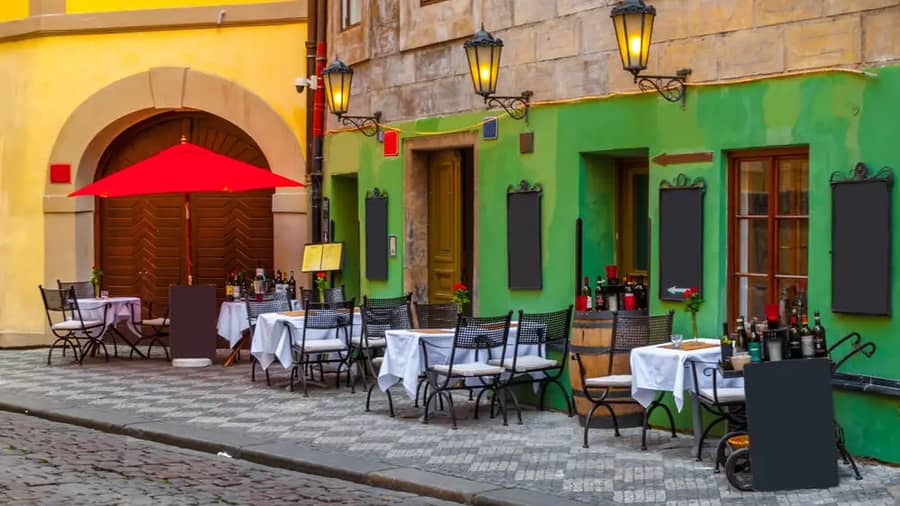
- Staré Město (Old Town) - Around Old Town Square and streets such as Karlova, many traditional pubs and beer halls can be found. The offer is tourist-oriented but includes classic Czech dishes.
- Malá Strana - Especially around Malostranské náměstí, classic restaurants in historic buildings offer a calmer atmosphere than the Old Town.
- Nové Město - More everyday and less museum-like. Locals eat along major streets and squares, resulting in more down-to-earth options.
Street Food
- Náplavka - The riverbank is one of the city’s main Street Food meeting points. In the evenings, stalls, bars and walkers mix, with markets and food events held regularly.
- Václavské náměstí (Wenceslas Square) - A classic stop for quick late-night snacks, especially along the main stretches and side areas.
- Jiřího z Poděbrad - Known for markets and temporary Street Food stalls. The offer changes, but the square remains a popular meeting point.
Beer halls and bars
- Žižkov - Famous for its high density of pubs. Many small beer halls, lively and uncomplicated.
- Dlouhá - One of the city’s best-known nightlife streets. Bars, clubs and pubs sit close together.
- Náměstí Republiky - Around the square and nearby streets, bars and beer venues stay open late.
- Vinohrady - Popular for wine bars, pubs and relaxed evenings away from major tourist flows.
Prague’s food and drink culture is deeply rooted in tradition and everyday life. From hearty local dishes to classic beers and simple favorites, eating and drinking in the city offers an authentic way to connect with its history, its habits and its atmosphere beyond the main sights.